
As a seasoned supplier of stamped sheet metal parts, I've witnessed firsthand the intricate dance between innovation and challenge in the world of high - strength sheet metal stamping. High - strength sheet metals have become increasingly popular due to their excellent mechanical properties, such as high tensile strength and good corrosion resistance. They are widely used in various industries, including automotive, aerospace, and construction. However, stamping these materials presents a series of hurdles that we as suppliers must overcome to deliver high - quality products.
1. Material Properties and Resistance
One of the fundamental challenges in stamping high - strength sheet metal parts lies in the material's inherent properties. High - strength metals, by their very nature, have greater hardness and resistance to deformation compared to traditional sheet metals. When the stamping process begins, the high resistance of the material can cause excessive wear on the stamping tools. For example, in the case of boron - steel, which is commonly used in automotive safety components, its ultra - high strength means that the pressure required for stamping is significantly higher. This leads to more intense friction between the tool and the metal, accelerating the tool's wear and tear.
The high yield strength of these materials also makes it difficult to achieve the desired shape accurately. The metal tends to spring back after stamping, deviating from the designed dimensions. Springback is a major concern as it can lead to poor part quality and misfit during assembly. To compensate for springback, we often need to add additional processes or modify the stamping dies. This not only increases production costs but also elongates the manufacturing cycle.
2. Stamping Tool Design and Manufacture
Designing and manufacturing stamping tools for high - strength sheet metals is a complex task. The tools need to withstand the high forces generated during the stamping process without deforming or breaking. Traditional tool materials may not be suitable for high - strength metal stamping, so we must opt for more advanced and expensive materials, such as high - performance tool steels or carbide - based alloys.
The design of the tool geometry is also crucial. Incorrect tool angles or radii can cause uneven stress distribution on the metal, leading to cracks or fractures during stamping. For instance, sharp corners on the tool can cause stress concentration in the metal, which is a common cause of part failure. Therefore, our engineering team spends a significant amount of time optimizing the tool design through computer - aided design (CAD) and finite element analysis (FEA) to ensure uniform stress distribution and minimize the risk of defects.
3. Lubrication and Cooling
Lubrication and cooling play a vital role in stamping high - strength sheet metal parts. Due to the high friction and heat generated during the stamping process, proper lubrication is essential to reduce tool wear and improve the surface quality of the parts. However, finding the right lubricant for high - strength metals is not easy. The lubricant needs to have high - temperature resistance and excellent anti - wear properties to withstand the extreme conditions of stamping.
In addition, effective cooling is necessary to prevent overheating of the tools and the metal. Overheating can cause thermal expansion of the tool, which affects the dimensional accuracy of the stamped parts. It can also lead to changes in the material's microstructure, reducing its mechanical properties. We use various cooling methods, such as water - cooled dies or air - cooling systems, to maintain the optimal temperature during stamping.
4. Quality Control and Inspection
Quality control is of utmost importance when stamping high - strength sheet metal parts. The high value of these materials and the critical applications they serve demand strict quality standards. We need to conduct comprehensive inspections at every stage of the production process, from raw material inspection to final product testing.
Non - destructive testing methods, such as ultrasonic testing and magnetic particle inspection, are commonly used to detect internal defects in the stamped parts. These methods can identify hidden cracks or voids that may not be visible on the surface. Dimensional inspection is also crucial to ensure that the parts meet the design specifications. We use advanced measuring tools, such as coordinate measuring machines (CMMs), to accurately measure the dimensions of the parts.
5. Cost and Production Efficiency
Stamping high - strength sheet metal parts is generally more expensive than stamping traditional sheet metals. The high cost of raw materials, advanced tooling, and additional processing steps all contribute to the overall production cost. To remain competitive in the market, we need to find ways to reduce costs without sacrificing quality.
Improving production efficiency is one approach. By optimizing the stamping process, reducing setup times, and increasing the speed of the stamping presses, we can produce more parts in less time. We also invest in the latest manufacturing technologies, such as automation and robotics, to streamline the production process and minimize human error.


Our Product Portfolio
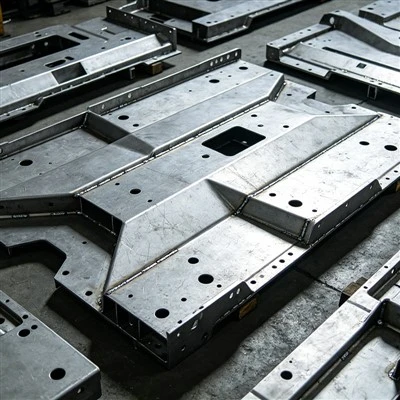
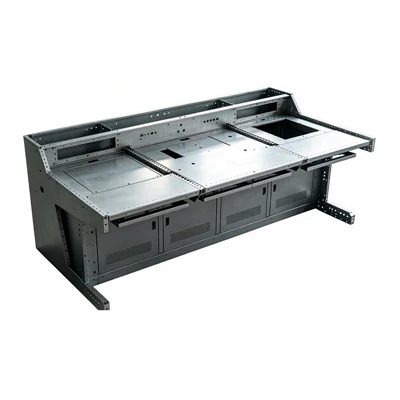
As a supplier, we offer a wide range of stamped sheet metal parts to meet the diverse needs of our customers. Our product portfolio includes CNC Machine Tool Sheet Metal Guards, which provide protection for CNC machine tools and ensure their safe operation. We also manufacture Special - shaped Sheet Metal Parts, customized to the unique requirements of different industries.
In addition, our Equipment Dustproof Sheet Metal Guards are designed to protect equipment from dust and other contaminants, extending its service life. For the construction machinery industry, we provide Construction Machinery Sheet Metal Parts that are durable and reliable. And our Bent Sheet Metal Parts offer precise bending angles and high - quality finishes.
Conclusion
Stamping high - strength sheet metal parts is a challenging but rewarding endeavor. Despite the numerous difficulties we face, such as material properties, tool design, lubrication, quality control, and cost - efficiency, we are committed to providing our customers with high - quality stamped parts. Our experience and expertise in the field allow us to overcome these challenges and deliver products that meet or exceed our customers' expectations.
If you are in need of high - quality stamped sheet metal parts, whether it's for a specific project or ongoing production, we invite you to engage in a procurement discussion with us. We look forward to the opportunity to collaborate and provide you with the best solutions for your stamping needs.
References
- Smith, J. (2018). Advanced Sheet Metal Forming: Processes and Analysis. Springer.
- Jones, A. (2020). Tool Design for High - Strength Metal Stamping. Manufacturing Technology Journal.
- Brown, C. (2019). Quality Control in Sheet Metal Stamping. Quality Management Review.