
Hey there! I'm a supplier of Aluminum Profile Cabinets, and today I wanna talk about whether aluminum profile cabinets have good heat resistance. It's a question I get quite often from customers, and it's a crucial factor to consider, especially in applications where high temperatures are involved.
Let's start by taking a look at the properties of aluminum itself. Aluminum is a metal that's well - known for its excellent thermal conductivity. This means it can transfer heat very quickly. When it comes to heat resistance, good thermal conductivity can be a double - edged sword.
On one hand, the high thermal conductivity of aluminum helps in dissipating heat. In many applications where heat is generated inside the cabinet, such as in electrical enclosures or industrial control cabinets, the ability to spread the heat out quickly can prevent hot spots from forming. For example, if there are electronic components inside an aluminum profile cabinet that generate heat during operation, the aluminum will quickly transfer that heat to the outer surface of the cabinet. From there, the heat can be released into the surrounding environment more efficiently.
However, thermal conductivity isn't the only aspect of heat resistance. Heat resistance also refers to a material's ability to maintain its structural integrity and performance at high temperatures. Aluminum has a relatively low melting point compared to some other metals, around 660 degrees Celsius (1220 degrees Fahrenheit). This means that if exposed to extremely high temperatures for an extended period, the aluminum can start to deform or even melt.
But don't worry too much. In most real - world applications, the temperatures inside or around aluminum profile cabinets rarely reach the melting point of aluminum. For normal electrical and electronic equipment use, the operating temperatures are usually well within the range where aluminum can perform well.
Let's consider some specific applications. For an EV Charger Outdoor Enclosure, heat is generated during the charging process. The aluminum profile cabinet can effectively dissipate this heat, ensuring the reliable operation of the charger. The charger is typically installed outdoors, and it needs to withstand different environmental conditions. The aluminum's corrosion - resistance properties, combined with its heat dissipation abilities, make it a great choice for this application.
Another application is the Stainless Steel Outdoor Enclosure. While stainless steel is also a popular choice for outdoor enclosures, aluminum profile cabinets can offer better heat dissipation in some cases. Stainless steel has a lower thermal conductivity than aluminum, which means it may trap heat inside the enclosure more easily. On the other hand, aluminum can transfer the heat to the outside faster, reducing the temperature inside the cabinet.
In the medical field, Medical Bedside Sheet Metal Cabinet is another example. These cabinets may house electronic medical devices that generate heat. By using an aluminum profile cabinet, the heat can be effectively managed, which is crucial for the proper functioning of the medical equipment and the safety of the patients.
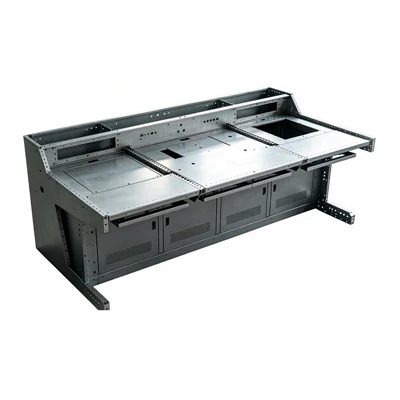
For industrial control systems, Control Console Cabinet is often used. The electronic components inside these cabinets can generate a significant amount of heat. Aluminum profile cabinets can help in maintaining a stable temperature inside the cabinet, preventing overheating of the components and reducing the risk of malfunctions.
The Sheet Metal Energy Meter Enclosure also benefits from the heat - resistant properties of aluminum. Energy meters can generate heat during operation, and an aluminum enclosure can ensure that the heat is dissipated, allowing the meter to operate accurately.
Now, you might be wondering how to enhance the heat resistance of aluminum profile cabinets even further. One way is to use heat - dissipating coatings. These coatings can increase the emissivity of the aluminum surface, which means it can radiate heat more effectively. Another method is to add heat sinks to the cabinet. Heat sinks are designed to increase the surface area available for heat transfer, thus improving the overall heat dissipation performance.
In addition to heat resistance, aluminum profile cabinets have other advantages. They are lightweight, which makes them easy to install and transport. They are also corrosion - resistant, which is especially important for outdoor applications or in environments where there is a lot of moisture. And they are relatively easy to customize, so they can be designed to meet the specific needs of different applications.
If you're in the market for cabinets and are considering heat resistance as an important factor, aluminum profile cabinets are definitely worth your attention. They offer a good balance between heat dissipation and structural integrity in most normal operating conditions.
If you're interested in learning more about our Aluminum Profile Cabinets or want to discuss your specific requirements, don't hesitate to reach out. We're here to provide you with the best solutions for your needs. Whether it's for an EV charger, a medical device, or an industrial control system, our cabinets can meet your heat - management and performance requirements. Let's start a conversation and find the perfect cabinet for your application!
References


- "Materials Science and Engineering: An Introduction" by William D. Callister Jr. and David G. Rethwisch
- Industry reports on the use of aluminum in cabinet manufacturing