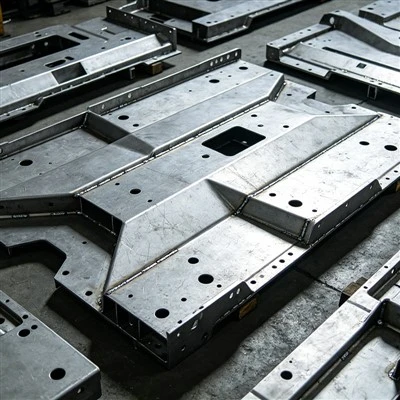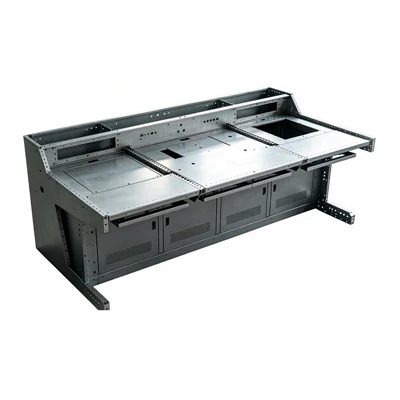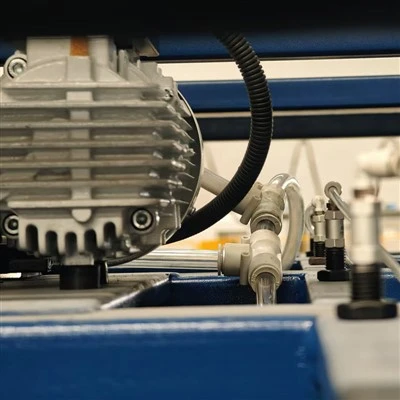

As a supplier of Bent Sheet Metal Parts, I've witnessed firsthand the critical role that bending accuracy plays in the production of high - quality sheet metal components. In the manufacturing industry, precision is not just a preference; it's a necessity. A slight deviation in the bending process can lead to a part that fails to meet the required specifications, resulting in wasted materials, increased production time, and potential customer dissatisfaction. In this blog, I'll delve into the factors that influence the bending accuracy of CNC bending machines for sheet metal parts.
Material Properties
The properties of the sheet metal material are among the most fundamental factors affecting bending accuracy. Different metals have different mechanical properties, such as yield strength, tensile strength, and ductility.
Yield strength is the stress at which a material begins to deform plastically. When bending a sheet metal, if the applied force is not sufficient to exceed the yield strength, the material will only undergo elastic deformation and return to its original shape after the force is removed. On the other hand, if the force is too high, it may cause excessive deformation or even cracking. For example, stainless steel has a relatively high yield strength compared to aluminum. When bending stainless steel, the CNC bending machine needs to apply more force, and precise control is required to ensure that the bending angle is accurate.
Tensile strength refers to the maximum stress that a material can withstand before breaking. Materials with high tensile strength are more difficult to bend, and the risk of cracking during bending is higher. Ductility, which is the ability of a material to deform plastically without fracturing, also affects bending accuracy. A more ductile material can be bent to a greater angle without cracking, allowing for more complex bending operations. For instance, copper is a highly ductile material, making it suitable for intricate bending processes.
Machine - related Factors
Machine Rigidity
The rigidity of the CNC bending machine is crucial for achieving high - bending accuracy. A rigid machine can better resist the forces generated during the bending process, reducing the deformation of the machine structure itself. If the machine is not rigid enough, it may deflect under the bending force, causing the bending angle to deviate from the desired value. For example, when bending thick or wide sheet metal, a machine with low rigidity may experience significant deflection, resulting in inaccurate bends.
Tooling Quality
The quality of the bending tools, such as the punch and die, has a direct impact on bending accuracy. Worn - out or damaged tooling can lead to uneven bending, inconsistent bending angles, and surface defects on the sheet metal parts. For example, a dull punch may cause the sheet metal to crinkle or tear during bending, while a misaligned die can result in an incorrect bending angle. Regular inspection and maintenance of the tooling are necessary to ensure its proper functioning. High - quality tooling made from durable materials can also improve the overall bending accuracy and extend the service life of the machine.
CNC System Precision
The precision of the CNC (Computer Numerical Control) system in the bending machine is another key factor. The CNC system is responsible for controlling the movement of the machine, including the positioning of the tooling and the application of the bending force. A high - precision CNC system can accurately execute the bending program, ensuring that the bending angle and dimensions of the parts meet the design requirements. Any errors in the CNC system, such as incorrect calibration or software glitches, can lead to inaccurate bends.
Operator Skills
The skills and experience of the machine operator also play a significant role in bending accuracy. An experienced operator can make adjustments based on the specific characteristics of the material and the requirements of the bending process.
Program Setup
The operator is responsible for setting up the bending program in the CNC system. This involves inputting parameters such as the bending angle, the bend radius, and the material thickness. Incorrect input of these parameters can lead to inaccurate bends. For example, if the material thickness is not accurately entered, the machine may apply an incorrect amount of force, resulting in a bending angle that is either too large or too small. Experienced operators know how to optimize the program settings based on their practical experience and knowledge of the material.
Real - time Monitoring and Adjustment
During the bending process, the operator needs to monitor the machine's operation and the quality of the bent parts in real - time. They can detect any potential issues, such as abnormal noises or deviations in the bending angle, and make timely adjustments. For example, if the operator notices that the bending angle is slightly off, they can make minor adjustments to the machine's settings to correct the problem before the production of more defective parts.


Environmental Factors
Temperature and Humidity
Temperature and humidity can affect the properties of the sheet metal material and the performance of the CNC bending machine. Changes in temperature can cause the sheet metal to expand or contract, which can affect the bending dimensions. For example, if a sheet metal part is bent at a high temperature and then cooled down, it may shrink, resulting in a smaller - than - expected bending angle. Humidity can also cause corrosion on the sheet metal surface and the machine tooling, which can affect the bending quality.
Vibration and Noise
Vibration and noise in the production environment can interfere with the operation of the CNC bending machine and affect bending accuracy. Excessive vibration can cause the machine to deviate from its normal operating path, leading to inaccurate bends. Noise can also be an indication of potential problems in the machine, such as loose parts or worn - out components. Therefore, it's important to maintain a stable and quiet production environment to ensure the accuracy of the bending process.
Conclusion
In conclusion, the bending accuracy of CNC bending machines for sheet metal parts is influenced by a variety of factors, including material properties, machine - related factors, operator skills, and environmental factors. As a supplier of Bent Sheet Metal Parts, we understand the importance of controlling these factors to produce high - quality parts. By carefully selecting the appropriate materials, maintaining the machine and tooling in good condition, training our operators to have high - level skills, and creating a stable production environment, we can ensure the bending accuracy of our products.
If you are interested in our Mechanical Sheet Metal Parts, Mechanical Sheet Metal Frames, Equipment Sheet Metal Housings, or Precision Sheet Metal Parts, please feel free to contact us for procurement and negotiation. We are committed to providing you with the best products and services.
References
- Smith, J. (2018). "Advanced Sheet Metal Forming: Principles and Applications". Publisher: ABC Press.
- Johnson, M. (2020). "CNC Machining Technology for Sheet Metal Parts". Journal of Manufacturing Science, 25(3), 120 - 135.
- Brown, K. (2019). "Influence of Material Properties on Sheet Metal Bending Accuracy". International Journal of Metalworking, 18(2), 87 - 95.