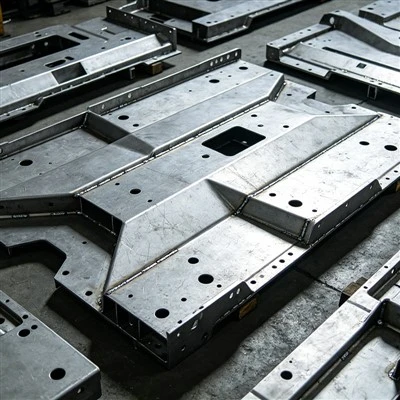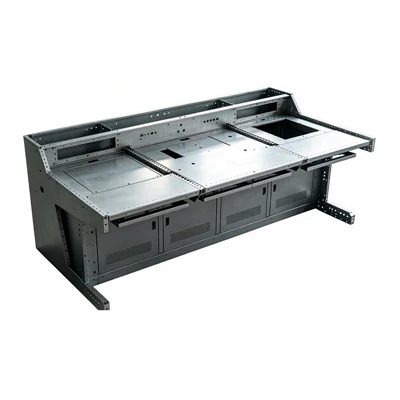

As a supplier of Mechanical Sheet Metal Frames, I know firsthand the importance of ensuring the accuracy of dimensions in our products. In the world of sheet metal fabrication, precision isn't just a nice - to - have; it's an absolute must. A single millimeter off can lead to parts not fitting together properly, causing delays in assembly, increased costs, and even safety risks. So, how exactly do we make sure that the dimensions of our Mechanical Sheet Metal Frames are spot - on? Let's dive in.
1. High - Quality Raw Materials
The journey to accurate dimensions starts with the raw materials. We always source our sheet metal from reliable suppliers. High - quality sheet metal has consistent thickness, density, and grain structure. Inconsistencies in these properties can lead to variations during the cutting and forming processes. For example, if the sheet metal has uneven thickness, it can cause the bending angles to be off when we're creating Bent Sheet Metal Parts. We conduct thorough inspections of the raw materials upon arrival. We check the thickness using calipers and look for any visible signs of damage or irregularities. By starting with top - notch materials, we set a solid foundation for accurate dimensioning.
2. Advanced Cutting Technologies
Cutting is one of the first steps in creating Mechanical Sheet Metal Frames. We utilize advanced cutting technologies like laser cutting and waterjet cutting. Laser cutting offers extremely high precision. It can cut through sheet metal with a narrow kerf, which means less material is removed during the cutting process. This results in more accurate cuts and better overall dimensional control. The laser beam can be precisely focused, allowing us to create complex shapes with tight tolerances.
Waterjet cutting is another excellent option, especially for materials that may be damaged by the high heat of laser cutting. A high - pressure stream of water mixed with abrasive particles cuts through the sheet metal. The advantage of waterjet cutting is that it doesn't introduce any heat - affected zones, which can cause warping and dimensional changes. These cutting technologies are controlled by computer - numerical - control (CNC) systems. CNC programs ensure that the cutting path is exactly as designed, reducing the chances of human error.


3. Precise Bending and Forming
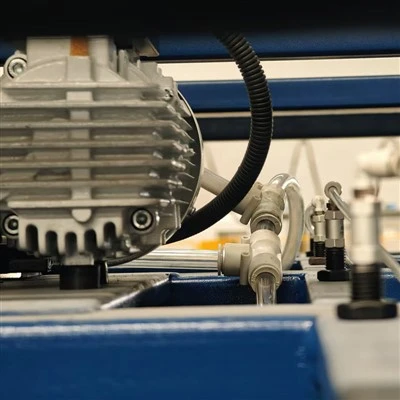
Once the sheet metal is cut, the next step is bending and forming to create the frame structure. We use CNC press brakes for bending operations. These machines are equipped with precision tools and can be programmed to achieve very specific bending angles and radii. The operator can input the desired dimensions into the CNC system, and the press brake will execute the bending process with high accuracy.
Before starting a production run, we always perform test bends. We measure the dimensions of the test pieces using precision measuring tools like micrometers and angle gauges. If there are any discrepancies, we make adjustments to the CNC program. This iterative process ensures that the final product meets the required dimensional specifications. When forming more complex shapes, we use custom - made dies. These dies are designed and machined to extremely tight tolerances. They help in creating consistent and accurate shapes across all the parts in a production batch.
4. Quality Control Checks at Every Step
Quality control is woven into every stage of the manufacturing process. We have in - process inspection points where we measure the dimensions of the parts at various stages. For example, after cutting, we check the length, width, and hole diameters of the cut pieces. After bending, we measure the bending angles and the overall dimensions of the formed parts.
We use a variety of measuring tools such as coordinate measuring machines (CMMs). CMMs can accurately measure three - dimensional coordinates of points on a part, allowing us to analyze its shape and dimensions in detail. By conducting these checks at multiple stages, we can catch any dimensional issues early on and take corrective action. This not only saves time and materials but also ensures that the final product meets the highest standards of accuracy.
5. Skilled and Trained Workforce
No matter how advanced the technology is, a skilled and trained workforce is essential for ensuring the accuracy of dimensions. Our workers are experts in sheet metal fabrication. They have years of experience in operating the machinery and using the measuring tools. We provide regular training programs to keep them updated on the latest techniques and technologies in the industry.
When setting up a new production job, our experienced workers can quickly identify potential issues and make necessary adjustments. They understand the nuances of the materials and the manufacturing processes, which allows them to make informed decisions to maintain dimensional accuracy. For example, they can tell if a particular batch of sheet metal requires a different cutting speed or bending force based on their experience.
6. Design Optimization
The design of the Mechanical Sheet Metal Frames also plays a crucial role in dimensional accuracy. We work closely with our customers during the design phase. Our engineers use advanced 3D modeling software to create detailed designs of the frames. This allows us to simulate the manufacturing process and identify any potential issues with the dimensions before the actual production starts.
We optimize the design to make it more manufacturable. For example, we may adjust the placement of holes and cuts to ensure that they can be accurately produced. If a design has extremely tight tolerances that are difficult to achieve with standard manufacturing processes, we work with the customer to find a more practical solution without compromising the functionality of the frame.
7. Environmental Considerations
The environment in which the sheet metal fabrication takes place can also affect the dimensions. Temperature and humidity can cause the sheet metal to expand or contract. We maintain a controlled environment in our manufacturing facility. We have climate - control systems that keep the temperature and humidity within a narrow range. This ensures that the sheet metal remains stable during the manufacturing process, reducing the chances of dimensional variations due to environmental factors.
In the world of mechanical sheet metal frames, accuracy is not just about meeting the numbers on a drawing; it's about delivering a product that fits perfectly into the end - application. Whether it's for Sheet Metal Equipment Frames, Construction Machinery Sheet Metal Parts, or Equipment Dustproof Sheet Metal Guards, our commitment to precision is unwavering.
If you're in the market for high - quality Mechanical Sheet Metal Frames with accurate dimensions, we'd love to hear from you. We're ready to discuss your specific requirements and provide you with the best solutions for your project. Get in touch with us to start a procurement conversation and experience the difference that precision manufacturing can make.
References
- Metals Handbook: Sheet Metal Forming Design and Practice.
- Precision Measuring Instruments and Their Applications in Sheet Metal Fabrication.
- Advances in CNC Machining Technology for Sheet Metal Production.