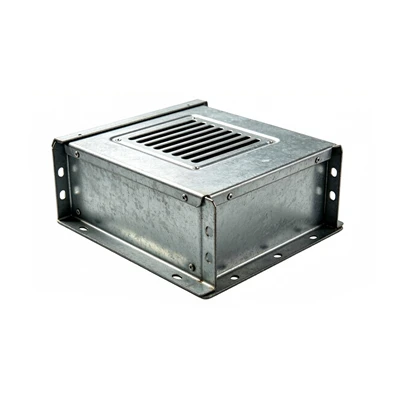
A drilling and tapping machine mainly consists of five functional modules: a power system, a spindle feed mechanism, a fixture positioning system, a control system, and a cooling and lubrication system. The power system typically uses a three-phase asynchronous motor or a servo motor to provide stable torque output for drilling and tapping. The spindle feed mechanism achieves precise axial feed through gear transmission or ball screws, supporting manual, semi-automatic, and fully automatic modes. The fixture positioning system reliably fixes the workpiece and ensures that the machined hole position remains strictly coaxial with the spindle centerline. The control system can be a mechanical cam control, PLC logic control, or a CNC system, used to coordinate the timing of various actions. The cooling and lubrication system continuously supplies coolant to the cutting area through nozzles, reducing tool temperature rise, flushing away chips, and extending tool life.
An intelligent tapping machine (also known as a thread tapping machine or tapping tool) is mainly used in machine tools, mold manufacturing, automotive parts, aero-engines, plastic machinery, printing and packaging equipment, construction machinery, locomotives, and tobacco machinery.
1. Servo Motor: Converts voltage signals into torque and speed to drive the controlled object.
2. Controller: Controls power supply and provides torque overload protection.
3. Display Screen: Controls and adjusts the feed and retraction speeds.
4. Tap Torque Protection Chuck: Adjusts the chuck torque; if the tap exceeds its torque limit when tapping to the bottom of a blind hole, it prevents slippage.
5. Support: Height adjustable; allows tapping at any position within the operating radius.