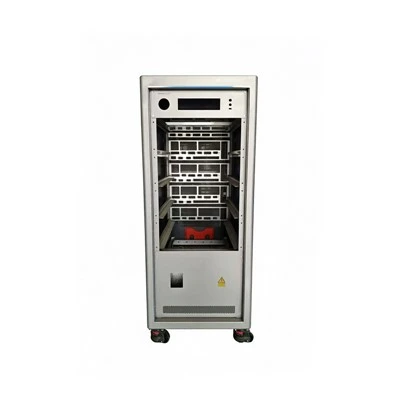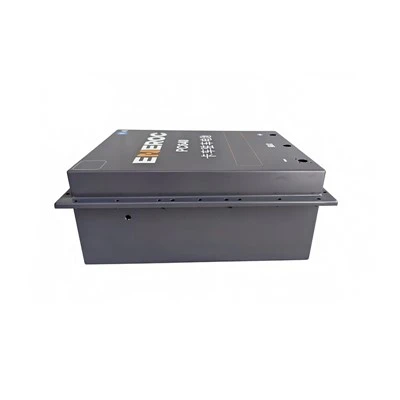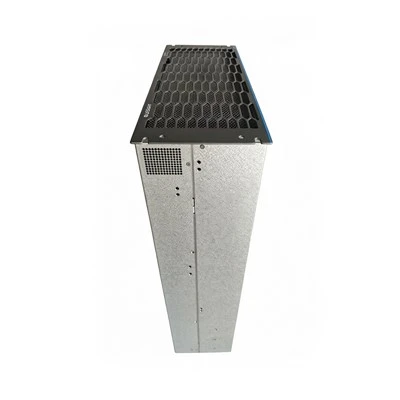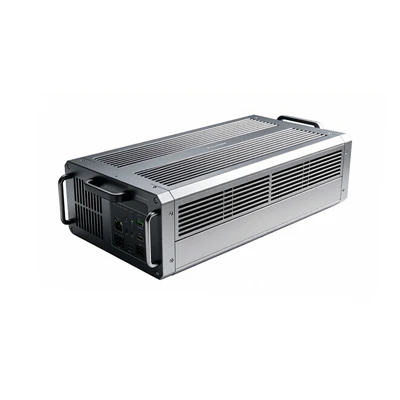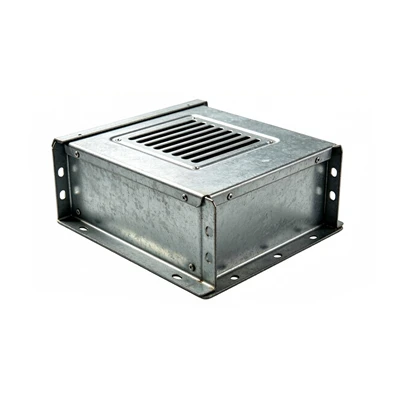
Sheet metal processing, as an important branch of modern manufacturing, is widely used in electronics, automotive, aerospace, construction, and many other fields. This technology uses a series of precise processes to process thin metal sheets into parts of various shapes and structures.
1.Shearing Process
Shearing is one of the basic processes in sheet metal processing, mainly used to cut raw materials into the required shapes and sizes. This process is the initial stage in the sheet metal processing flow and directly affects the accuracy and efficiency of subsequent processing. Shearing processes can be divided into various methods depending on the equipment and technology used, such as mechanical shearing, laser shearing, plasma shearing, and water jet shearing. Different shearing methods have their own characteristics and are suitable for processing sheet metal of different thicknesses and materials.
Mechanical shearing is a more traditional shearing method, mainly using shearing machines. Shearing machines can cut thin metal sheets into basic shapes, such as rectangles or other simple straight line combinations. The advantages of mechanical shearing are low processing cost and simple operation, but the disadvantages are generally lower precision, burrs after cutting, and limited shape options, making it unable to meet the processing needs of complex curves. Mechanical shearing is typically used for processing thicker sheet metal, primarily in the blanking process to provide a basic blank for subsequent processing.
Laser shearing is one of the most widely used technologies in modern sheet metal processing, including three main types: YAG solid-state laser cutting machines, CO2 laser cutting machines, and fiber laser cutting machines. YAG solid-state laser cutting machines are inexpensive and stable, but have low energy efficiency. They are mainly used for drilling, spot welding, and cutting materials up to 8mm thick, and are particularly suitable for cutting non-ferrous metals such as aluminum and copper plates. CO2 laser cutting machines generally have a power range of 2000-4000W and can stably cut carbon steel up to 20mm thick, stainless steel up to 10mm thick, aluminum alloys up to 8mm thick, and non-metallic materials such as wood and acrylic. Fiber laser cutting machines have a wider power range, reaching 1000W-30000W. Their advantages include low power consumption, easy maintenance, and high speed, but they are difficult to cut highly reflective materials such as aluminum and copper plates. Laser shearing offers advantages such as burr-free cutting, high precision, and the ability to cut arbitrarily complex shapes, such as leaves and flowers, but its processing cost is relatively high.
Plasma shearing primarily utilizes a high-temperature plasma arc for cutting and is suitable for medium-thickness sheet metal. Waterjet shearing cuts materials using high-pressure water jets, making it particularly suitable for cutting composite materials or materials where heat-affected zones need to be avoided. In actual production, composite processing equipment combining CNC punching and laser cutting significantly improves processing efficiency, making sheet metal blanking more precise and efficient.
Before operation, the shearing process requires sheet metal engineers to carefully design and specify product drawings, especially calculating the unfolded dimensions, which are related to bending radius, bending angle, sheet material, and sheet thickness. The precision of the shearing process directly affects the feasibility of subsequent processing and is a fundamental guarantee of sheet metal processing quality.
2.Stamping Process
Stamping is one of the most widely used processes in sheet metal processing. It involves applying pressure to raw materials using a punch press and dies, causing plastic deformation or separation to obtain workpieces of the desired shape and size. This process boasts advantages such as high production efficiency, low cost, and high material utilization, making it particularly suitable for mass production. Stamping is widely used in industries such as automotive, electronics, and home appliances, and is an indispensable processing method in modern manufacturing.
Stamping processes can be broadly categorized into two types based on the processing method: conventional stamping and CNC stamping. Conventional stamping typically uses fixed dies, suitable for mass production, although initial die costs are high, the quality of parts is guaranteed. CNC stamping, on the other hand, achieves automated processing through CNC turret punch presses. The processing range for sheet metal thickness is typically 3.0mm or less for cold-rolled and hot-rolled sheets, 4.0mm or less for aluminum sheets, and 2.0mm or less for stainless steel. The maximum sheet metal size that CNC stamping can process is 1250mm x 4000mm, and the minimum hole diameter is ≥1T. Stamping is particularly suitable for processing metal parts with curved distributions or pinhole/grid-like structures, allowing for rapid separation and shaping of the metal structure.
Common stamping processes include single stamping, continuous blanking, blanking machining, and array forming. Single stamping is suitable for processing metal parts with arc-shaped distributions, pinholes, or grid-like structures. Continuous blanking can be divided into unidirectional and multidirectional methods. Multidirectional blanking is typically suitable for processing large metal layers or forming large metal holes, while unidirectional blanking is suitable for processing multiple stacked metal parts. Blanking machining, also known as blanking, mainly involves grinding and finishing sheet metal parts, serving the purpose of precise positioning and fine grinding. Array forming, by combining existing dies, allows for the rapid processing of large sheet metal products with the assistance of CNC machine tools, making it particularly suitable for large-scale production of similar sheet metal parts.
Die design is a crucial aspect of stamping. Different shapes require different dies, and the die precision directly determines the dimensional accuracy and surface quality of the stamped parts. The die clearance needs to be adjusted according to the material thickness and properties. If the clearance is too large, the product will have large burrs after stamping; if the clearance is too small, it will affect the die's lifespan and, in severe cases, cause die damage. Common dies used in stamping processes include round holes, oblong holes, and bosses. Boss height is limited and depends on the sheet material, sheet thickness, and boss bevel angle. Bosses include heat dissipation holes and mounting holes. Due to bending, the distance between the edge of the designed hole and the sheet material edge and the bending edge are restricted.
Special attention must be paid to material selection and process parameter settings in stamping processes. Material thickness must be measured and confirmed upon arrival to ensure it is within reasonable tolerances. When selecting material dimensions, material utilization should be considered to ensure the highest possible utilization rate. Simultaneously, the dimensions of sheets of the same material and thickness should be kept consistent. The proper application of stamping processes can significantly improve production efficiency and reduce production costs, making it one of the important processes in sheet metal processing.
3.Bending Process
Bending is an important means of achieving three-dimensional forming in sheet metal processing. A bending machine bends metal sheets to a predetermined angle and shape to form the desired structural features. This process holds a central position in sheet metal processing because many products require bending to achieve the desired shape and structure. The precision and efficiency of the bending process directly affect the quality of the final product and are a direct reflection of the level of sheet metal processing technology.
Bending is typically achieved using a bending machine (also called an edge bending machine). Upper and lower blades cold-press thin metal sheets to deform them and obtain the desired shape. The bending process requires combinations of dies of different shapes. These dies are divided into upper and lower dies; different shapes require different dies, and the quality of the dies determines the accuracy of the bending dimensions. During the bending process, the minimum bending radius and the bending elongation coefficient must be carefully controlled. If the minimum bending radius is too small, the material's tensile ductility will increase, and when the elongation reaches its limit, the material will fracture. The bending elongation coefficient is affected by various factors such as material type, thickness, and V-groove width.
Among commonly used materials, stainless steel has the highest elongation coefficient, while aluminum sheet has the lowest. For the same material, different V-groove widths result in different bending elongation coefficients; generally, a wider V-groove results in a higher elongation coefficient. Because sheet metal exhibits springback after bending, the bending angle should typically be smaller than the required bending angle.
Several key points require special attention in the bending process: material thickness, bending radius, bending angle, and bending sequence. Sheet metal bending dimensions need to be calculated based on factors such as sheet metal thickness, bending angle, and bending length. Regarding single-sided height, it depends on the size of the bending machine and the height of the upper blade; the double-sided height should not exceed the maximum single-sided height. Besides being limited by single-sided height, it is also limited by the bottom edge: bending height < bottom edge. Since sheet metal parts are formed by bending a thin metal sheet, the contact at the bent edge is not sealed and lacks a rigid connection. If not treated, this will affect strength. The usual treatment is welding, and the technical requirements on the drawings include: weld corners, weld corners, and rounding.
4.Welding Process
Welding is a key process in sheet metal processing for connecting components and strengthening structures. It connects two or more metal parts into a single unit through melting or pressurization. This process plays a crucial role in sheet metal processing because many products require connecting multiple sheet metal parts to form a complete product structure. Welding not only achieves permanent connections between metal parts but also enhances the strength of the joints and improves the overall performance of the product.
Common welding methods in sheet metal processing include gas shielded welding, laser welding, resistance welding, argon arc welding, electric welding, robotic welding, and spot welding. Gas shielded welding and laser welding typically use welding wire, but the latter produces a more aesthetically pleasing weld, although it is more expensive, and both methods result in greater deformation of the sheet metal due to heat. Resistance welding utilizes the contact heating and pressurization of upper and lower electrode heads for welding. Its advantage is that it does not require welding wire, and the deformation of the sheet metal after welding is minimal. If the shape of the part to be welded is complex, the shape of the electrode head will have high requirements. These different welding methods are suitable for various sheet metal connection needs. Choosing the appropriate welding method can improve product quality and production efficiency.
Welding processes have two main applications in sheet metal processing: one is to connect multiple sheet metal parts together to achieve the purpose of processing finished products or assembly parts; the other is to weld the edges of individual parts to make the bent edges precise and increase their strength. The rational application of welding processes can significantly improve the structural strength and stability of sheet metal parts and is an important component of sheet metal processing technology. The selection of welding processes needs to consider factors such as material properties, welding requirements, and processing conditions.
5.Surface Treatment Processes
Surface treatment is the final step in sheet metal processing. It processes the surface of sheet metal products to improve their corrosion resistance, aesthetics, and functionality. Although this process does not directly change the shape and size of the sheet metal parts, it has a decisive impact on the quality and performance of the product. Surface treatment processes can give sheet metal products rich colors, good texture, and excellent corrosion resistance, enabling them to maintain good performance under various environmental conditions.
Common surface treatment processes in sheet metal processing include spraying, electroplating, anodizing, and sandblasting. Spray coating is the most common surface treatment method, including powder coating and painting. Powder coating involves electrostatically adsorbing powder coating onto the surface of sheet metal parts, then melting and solidifying the powder through high-temperature baking to form a hard coating. Powder coating has advantages such as environmental friendliness, corrosion resistance, and a wide range of colors, and is widely used in home appliances, electronics, and communication cabinets. Painting uses liquid coatings, which are evenly applied to the surface of sheet metal parts using spraying equipment, and then dried by baking or natural drying to form a protective layer. Painting can achieve various colors and effects as needed, but it is not as environmentally friendly as powder coating.
Electroplating is a process that deposits a layer of metal or alloy on the surface of sheet metal parts through electrolysis to improve their corrosion resistance, conductivity, or decorative properties. Common electroplating layers include zinc plating, chromium plating, and nickel plating. Electroplating is particularly suitable for sheet metal parts requiring high corrosion resistance, such as automotive parts and electronic connectors. Anodizing is mainly used for aluminum and aluminum alloy sheet metal parts, forming a dense oxide film on the aluminum surface through electrochemical methods, improving its corrosion resistance and wear resistance. Anodizing can achieve various color effects and is an important method for surface treatment of aluminum products.
Sandblasting uses a high-speed stream of sand to impact the surface of sheet metal parts, creating a uniform surface texture and improving surface quality. Sandblasting not only improves the appearance of sheet metal parts but also enhances the adhesion of subsequent coatings. Sandblasting is divided into dry sandblasting and wet sandblasting. Dry sandblasting is more efficient but may generate dust pollution; wet sandblasting is more environmentally friendly but more expensive. Besides the above processes, sheet metal processing also includes phosphating, passivation, polishing, and wire drawing, each with its unique characteristics and applicable scope.
This concludes our sharing of relevant information on sheet metal processing technologies. The selection and application of sheet metal processing technologies requires comprehensive consideration of various factors, including product requirements, material properties, production volume, and cost control. A reasonable process selection can improve product quality, reduce production costs, and enhance enterprise competitiveness. Innovation and development in sheet metal processing technologies will drive the progress of the entire manufacturing industry, providing more high-performance, high-quality sheet metal products for various industries.